Our goal, the 2-squad structure, and the AI-assisted Vibe Coding approach.
6 markets interviewed. The diagnosis: friction, filtering, and desire for agency.
Where feedback dies and the unofficial paths users take.
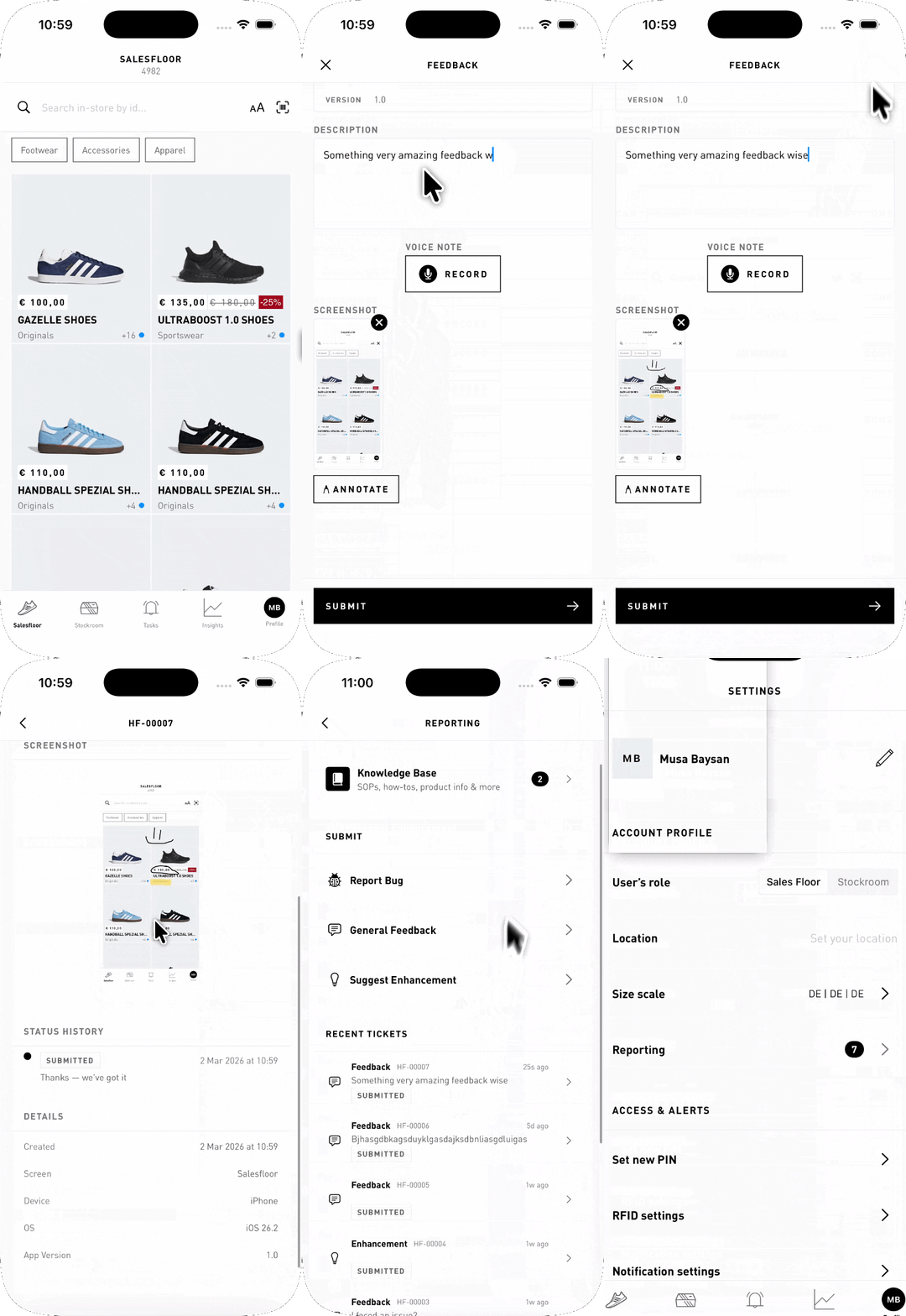
The Direct Line: in-app feedback with multimedia, voice notes, and offline support.
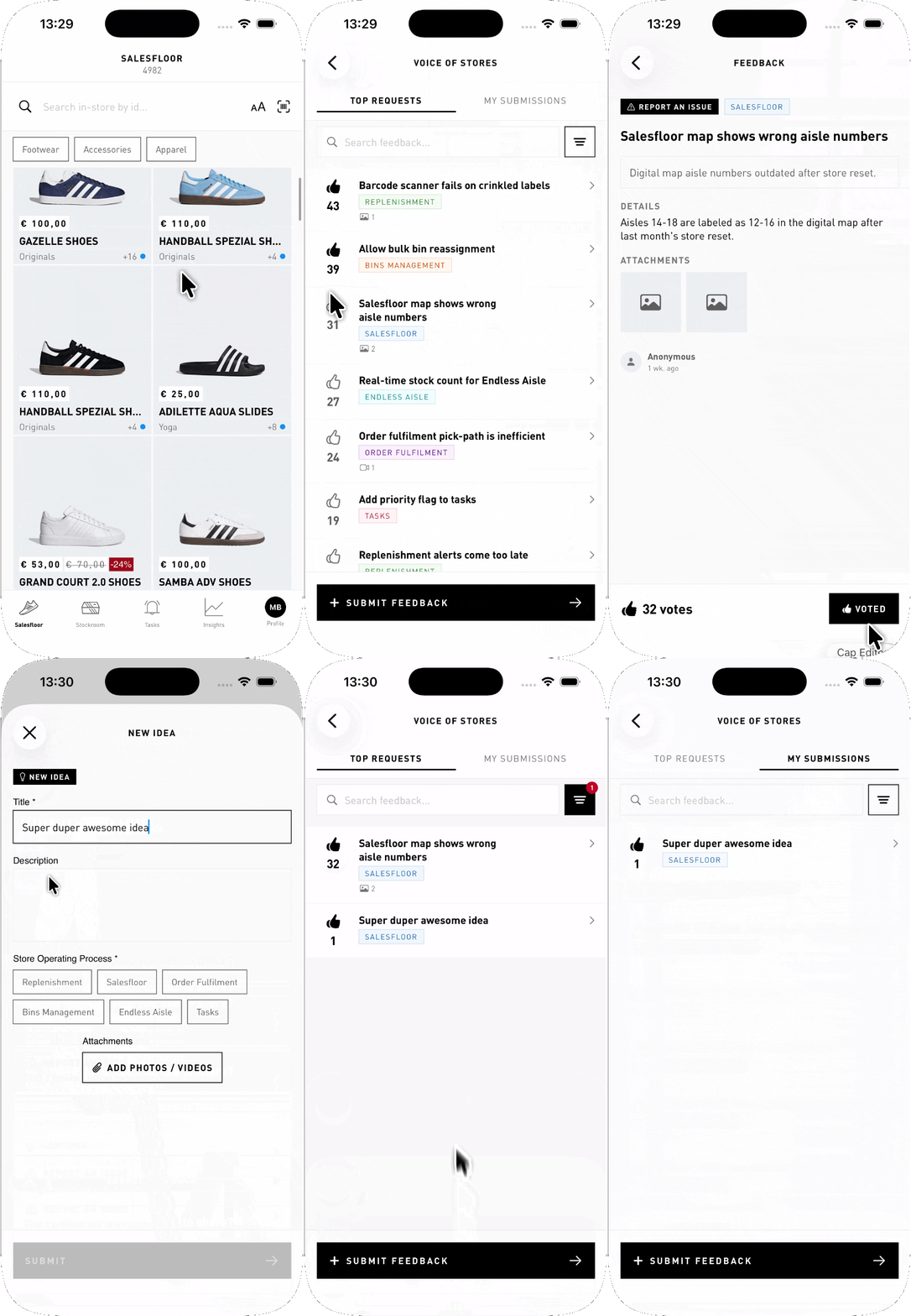
The Voice: democratized voting, localization, and duplicate detection.
Summary, side-by-side comparison, and our ask for Q2 prioritization.
We set out to design a "nervous system" for Harmony — to move from noise to actionable signal for our 30,000 users across all markets Harmony operates.
Every feature you're about to see traces back directly to a real user signal from our Global Operations market interviews and the 15 European Digital champions.
12–14 participants split into two cross-functional squads — each with a Designer, Front-end, Back-end, QA, and Product member.
We used an AI-assisted "Vibe Coding" model to build working SwiftUI prototypes in two days. No Figma sketches — real, running code in Xcode.
Users are forced to leave the app to report issues. Store devices block screen recording. Feedback arrives as vague emotion — not actionable data.
District Managers, CX, and Global Ops manually block signals before they reach product. Cultural silence in Korea. Broken 123-support in Europe destroyed trust.
Users want to vote on features, solve their own problems through FAQs, communicate in their own language, and track feedback status.
Auto-capture the current screen, then annotate with PencilKit — draw, highlight, undo/redo. Attached as visual evidence.
Real-time speech recognition via SFSpeechRecognizer. Speak your feedback while holding a scanner or box.
Screen name, device model, app version, store ID, OS version, timestamp — all captured automatically. Zero effort.
Human-readable ID (HF-00042), status timeline, and a "Nudge" button for stalled tickets (>3 days unchanged).
Searchable, categorized articles with pinned content and markdown rendering. 7 seed articles ship offline.
Edge-swipe gesture or 5-tap header opens an instant drawer — Report Bug, General Feedback, Suggest Enhancement, or browse KB.
All data persisted locally first. Network monitor auto-syncs when connectivity resumes. Unsynced items show a clear indicator. Graceful degradation — never blocks the user.
Designed for use while holding a scanner or box. Edge-swipe gesture opens the Quick Actions panel. Voice notes eliminate typing. Large tap targets throughout.
Auto-captures the current screen as a screenshot programmatically — bypasses SAM device recording restrictions entirely. Annotate with PencilKit overlay.
Toggle-based voting on any feedback item. Vote counts drive the "Top Requests" ranking — popular requests rise naturally without gatekeepers.
Each item stores original language + translated text. One-tap "Show Original / Show Translation" toggle. Korean & Japanese input supported natively.
Keyword-overlap algorithm (40% threshold) surfaces similar existing feedback before publishing. Vote on duplicates instead of creating noise.
Filter by Store Operating Process — Replenishment, Salesfloor, Order Fulfilment, Bins, Endless Aisle, Tasks. Color-coded chips with badge counts.
"New Idea" or "Report an Issue" with title, description, process tag, and up to 10 photo/video attachments. Anonymous option available.
"Top Requests" + "My Submissions" tabs. See your feedback, track votes, know that someone is listening and acting.
Submit in Korean, read in English. The translation toggle ensures every voice is heard regardless of language. No more "Cultural Silence."
All submissions are anonymous — removing the social pressure that prevents junior staff from speaking up, especially in hierarchical cultures.
Even without formal complaints, the voting mechanism captures "passive signal" — a vote is a low-friction agreement that a problem matters.
In-app feedback with screenshot annotation, voice-to-text, auto-captured metadata, ticket tracking with nudge, and a full knowledge base — all offline-first and one-thumb operable.
Voice of Stores with democratized voting, multi-language translation, duplicate detection, process-based filtering, anonymous submission, and a top requests hub.
Working prototypes demonstrated to Dharma, Niall, and Vandana
Feed proposals into discussion. Evaluate build vs. buy. Technical feasibility review.
Select concept. Run pilot in 1–2 markets. Measure signal capture improvement.